Service of Process and the Collapse of Jurisdiction in Child Support Enforcement
The Threshold Requirement Courts Cannot Ignore Service of process is not a procedural formality. It is the mechanism by which a court acquires authority over a person. Without it, jurisdiction does not exist. And without jurisdiction, there is no lawful power to adjudicate, enforce, or compel compliance. This principle is foundational. It applies equally in […]
Monell Liability and Systemic Violations in Child Support Enforcement
From Jurisdictional Defects to Systemic Constitutional Violations In every judicial proceeding, jurisdiction is the threshold requirement of lawful authority. Without it, no court order carries legal force. This principle is not merely procedural—it is constitutional. When jurisdiction is absent, every subsequent act taken under color of that judgment is void ab initio. Yet in modern […]
Why Federal Courts Avoid Family Court Cases — And How to Appeal When Constitutional Rights Are Ignored

Many fathers who try to challenge family court actions in federal court quickly discover something frustrating: federal courts often refuse to get involved. Even when the case involves serious constitutional issues—such as lack of jurisdiction, denial of due process, or unlawful wage garnishment—the federal district court may dismiss the case without addressing the core question. […]
How to File a FOIA/Public Records Request That Actually Works: A Practical Guide Based on a Successful Massachusetts Appeal
Understanding the Importance of Effective FOIA Requests The Freedom of Information Act (FOIA) represents a critical pillar in the framework of democratic governance, granting the public the right to access information held by government agencies. Established in 1966, FOIA empowers citizens to unveil the operations and decision-making processes within public institutions, thereby fostering a culture […]
Title IV-D: When America’s Family Courts Became State Actors

How federal child-support funding turned “impartial” judges into enforcement partners. What Is Title IV-D? Title IV-D of the Social Security Act (42 U.S.C. § 651 et seq.) created a national reimbursement system that pays states to locate parents, establish paternity, and enforce child-support orders. Each state must maintain a single Title IV-D agency—usually in its […]
Rule 60(b)(4) – Void Judgments and Fraud on the Court: No Statute of Limitations

In American law, the idea of finality—that a case must eventually end—has always been balanced against something even more fundamental: legitimacy. A judgment obtained without jurisdiction, or through deception, is not merely flawed; it is void from the beginning. Under Federal Rule of Civil Procedure 60(b)(4), anyone affected by such a judgment can ask the […]
When Administrative Orders Violate Due Process: The Hidden Problem in Income Withholding for Support

Across the United States, state and county child-support agencies routinely send Income Withholding for Support (IWO) forms directly to employers, banks, and payroll processors—often without any judge’s signature or valid court judgment attached. Many agencies even claim this is perfectly lawful because the IWO is a “federally required form” under Title IV-D of the Social […]
The Writ of Mandamus: An Extraordinary Remedy for Extraordinary Delay
In the long tradition of American law, few tools are as powerful — or as rarely used — as the Writ of Mandamus. It is the last resort when a court or government officer refuses to perform a duty so clear and mandatory that silence itself becomes an act of injustice. Waiting on the Court? […]
When Justice Delayed Becomes Justice Denied: The Power of 28 U.S.C. § 1657(a)

Every litigant who steps into federal court expects one basic thing — that their case will be heard fairly and without unreasonable delay. Yet, in practice, many constitutional and jurisdictional motions linger on the docket for months or even years while the harm they describe continues every day. Congress saw that danger coming. That’s […]
Standing Firm on the Right to Be Heard: My Motion to Vacate the Curb Order
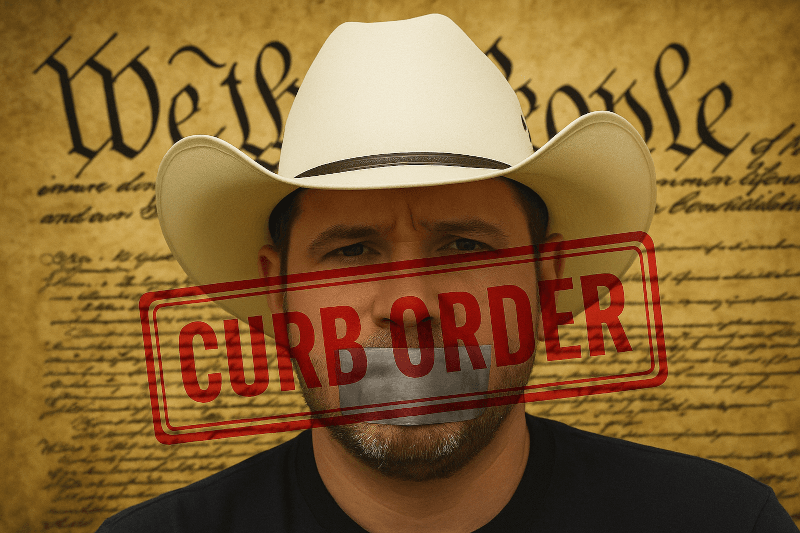
Introduction: The Importance of Article III Jurisdiction Article III of the United States Constitution establishes the judicial power of the federal government, delineating the authority of federal courts and the rights of individuals within this framework. It is critical to recognize that Article III jurisdiction is not merely a technical detail; it embodies the essential […]